


Not a daily task diary. A demand-driven workforce platform.
TimePlanner connects staffing decisions to real operational needs, from operational requirements and measurable workload to a published schedule that adapts as the day unfolds.
Understand demand
Translate operational requirements and measurable workload into staffing needs and coverage heatmaps.
Optimize resources
Allocate employees to shifts and breaks based on skills, availability, policies and capacity.
Stay in control
Manage changes, approvals, exceptions and communications in one coordinated workflow.
One platform for every shift-based team. Wherever demand drives staffing.
TimePlanner adapts to the demand drivers, shift patterns and working rules of each department, so very different teams can be planned in the same platform.
Call centers
Call volumes and service level targets turned into agents per interval, with breaks and work-from-home shifts.
Ground handling
Staffing driven by the flight schedule for ramp, check-in, gate and baggage teams, with skills and certifications.
Airport & passenger services
Security, information desks and passenger assistance planned around passenger flows and peaks.
Other shift-based teams
Maintenance, back office and any team that works in shifts against a measurable workload.
Why it matters
The challenges TimePlanner addresses
Demand visibility
Staffing decisions disconnected from actual operational needs.
Scheduling complexity
Multiple shifts, constraints, teams and employee skills.
Manual coordination
Time-consuming swaps, requests and approvals.
Fragmented operations
Limited visibility across sites, events and exceptions.
Solution capabilities
Everything workforce planning needs, in one platform
Six capabilities that work together, from demand visibility to the KPIs that show how well your schedules perform.
Demand heatmaps
Coverage visibility by interval, role and skill
Planning
Translating demand into staffing needs
Optimization
Smart, constraint-aware scheduling
Break planning
Automatic breaks that protect coverage
Swaps & approvals
Request management with policy checks
Analytics
Dashboards and KPIs for every role
How it works
An integrated planning lifecycle
Model demand
Requirements, workload and staffing heatmaps
Match capacity
People, skills and eligibility
Build schedules
Shifts, duties and breaks
Publish & adapt
Swaps, events and alerts
Measure & improve
KPIs, reporting and insights
Demand-driven planning is the foundation of every downstream scheduling decision.
Scheduling
Four scheduling modes. One operating model.
Choose the right level of automation for each team and scenario, from fully optimized schedules to direct supervisor control.
Mode 01
Automatic
Generate optimized schedules using coverage demand, rules and constraints.
Mode 02
Template-based
Apply reusable patterns for predictable operational scenarios.
Mode 03
Free / manual
Allow authorized supervisors to create and adjust shifts directly.
Mode 04
Hybrid
Combine automated recommendations with human review and edits.
Demand & optimization
Plan for demand, not just availability
Staffing heatmaps
Visualize required versus available capacity by time interval, department, role or skill. Identify gaps and over-coverage before publication.
Constraint-aware allocation
Balance coverage, skills, availability, working-time rules, days off, overtime and organizational priorities.
Execution
Break planning and operational flexibility
Keep schedules working on the day, with breaks, swaps and irregularities managed in one coordinated workflow.
Automatic break planning
Allocate breaks while preserving minimum coverage and respecting break policies.
Shift & break swaps
Employee-initiated requests with eligibility checks, policy validation and approvals.
Events & irregularities
Handle absences, operational disruptions and schedule exceptions.
Organization & security
A clear organizational and access model
Site-scoped permissions
Role-based access controls restrict functionality and data to authorized sites.
Cross-site visibility
Multi-site users select an active site, and authorized leaders view consolidated reporting.
Cross-site and cross-team assignments follow explicit business rules.
Integrations & master data
Connected employee and operational data
People & structure
Employee records, departments, groups, teams, supervisors and roles.
Planning inputs
Skills, duty codes, working patterns, availability and requirements.
External systems
HRIS, identity and other operational systems through defined integrations.
Experience & analytics
Role-specific dashboards and actionable insights
Employees
Personal shifts, upcoming breaks, notifications, swap and time-off requests.
Supervisors
Team coverage, schedule editing, pending approvals and exceptions.
Workforce planners
Demand heatmaps, staffing gaps, scheduling quality and capacity trends.
Administrators & leaders
Access policies, site-level configuration, consolidated KPIs and reports.
TimePlanner in action · call center example
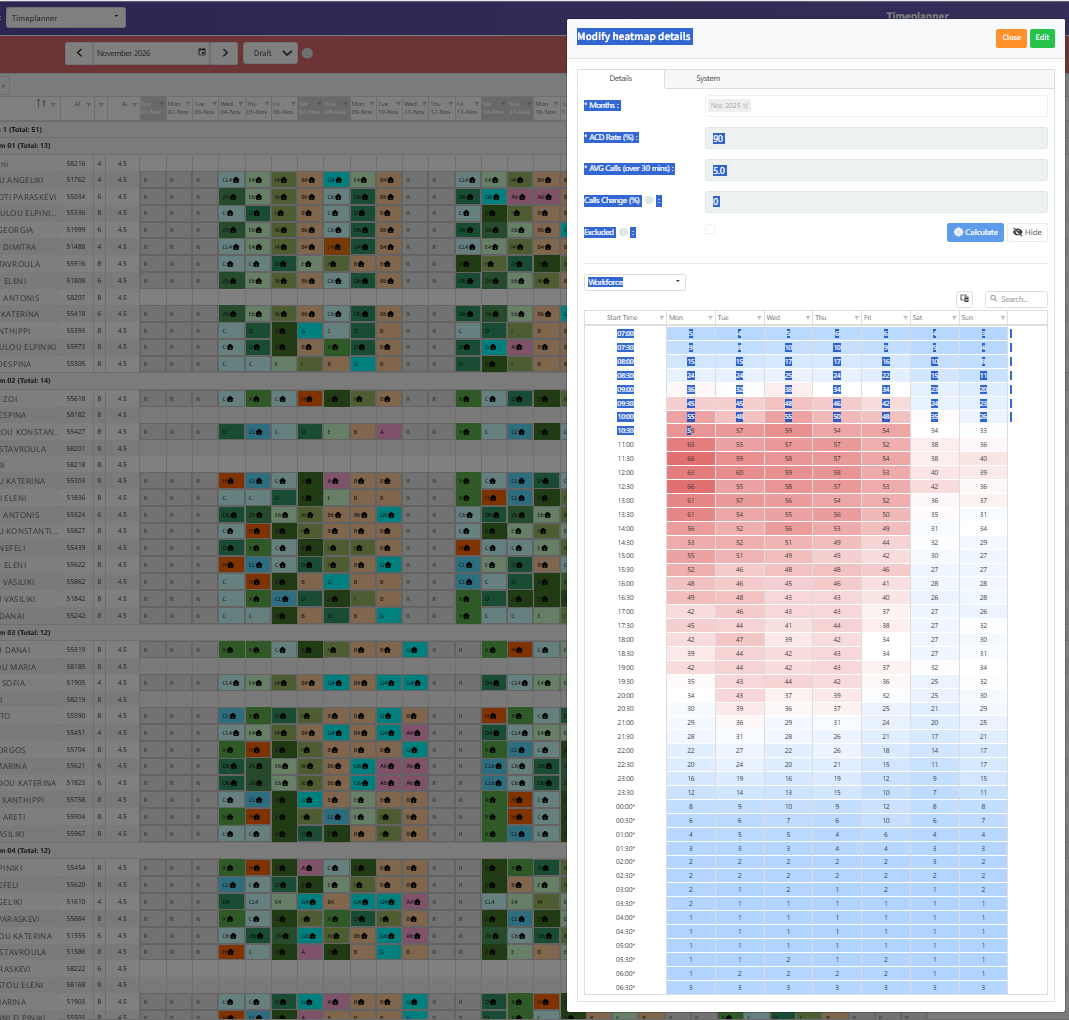
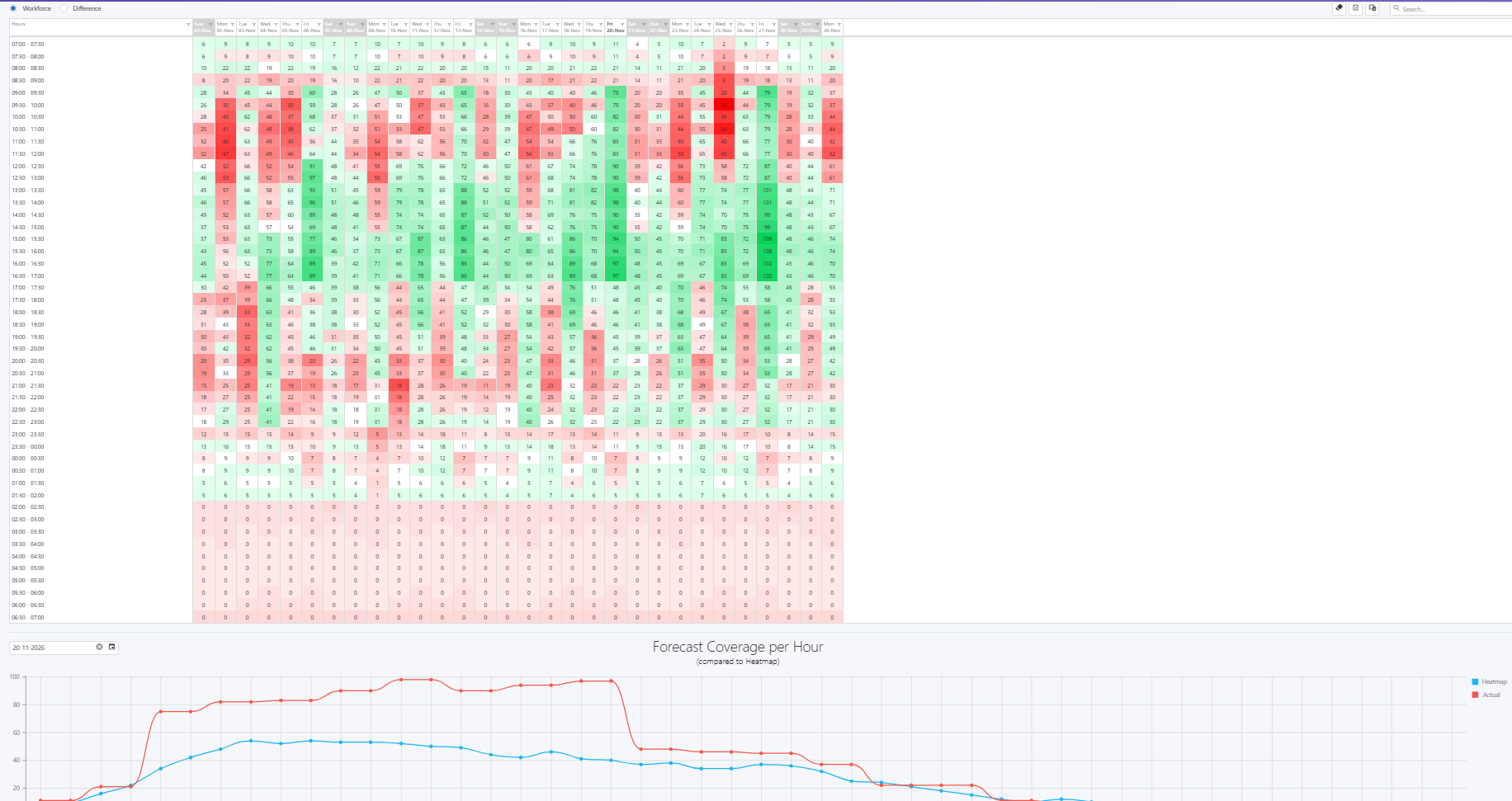
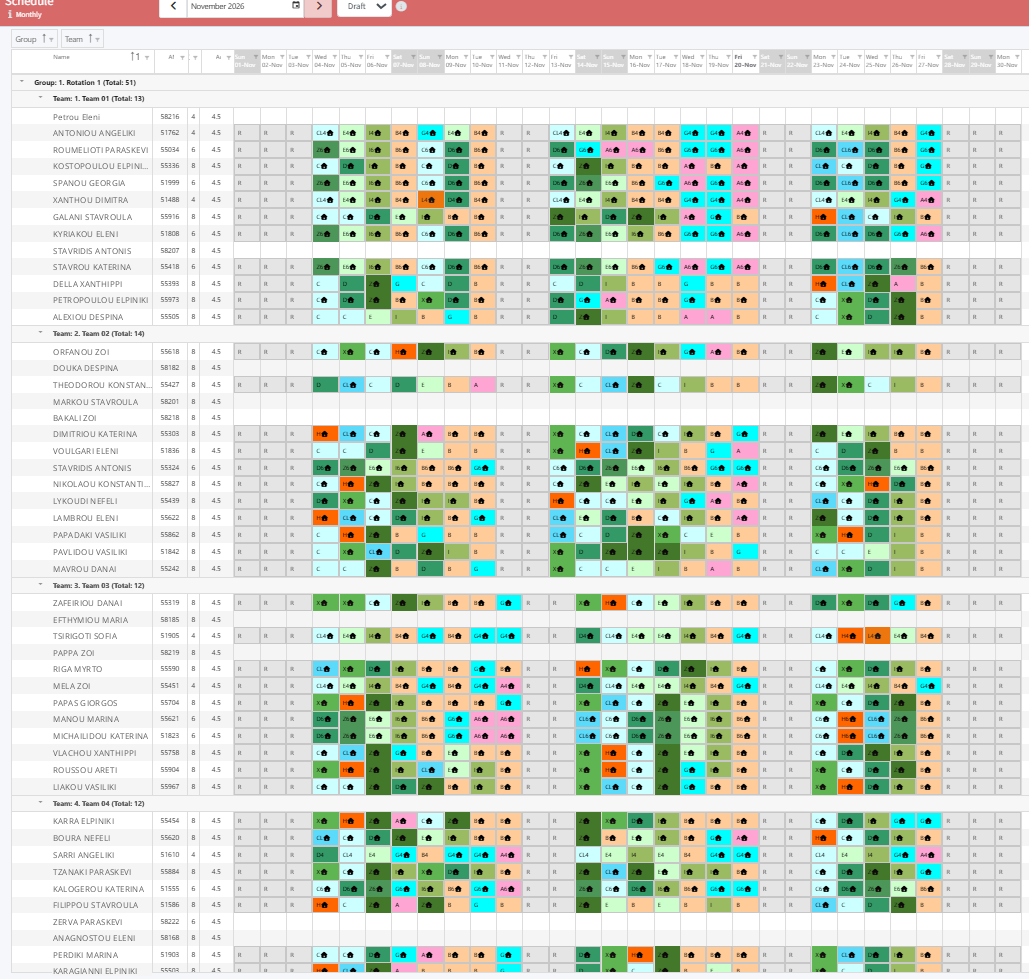
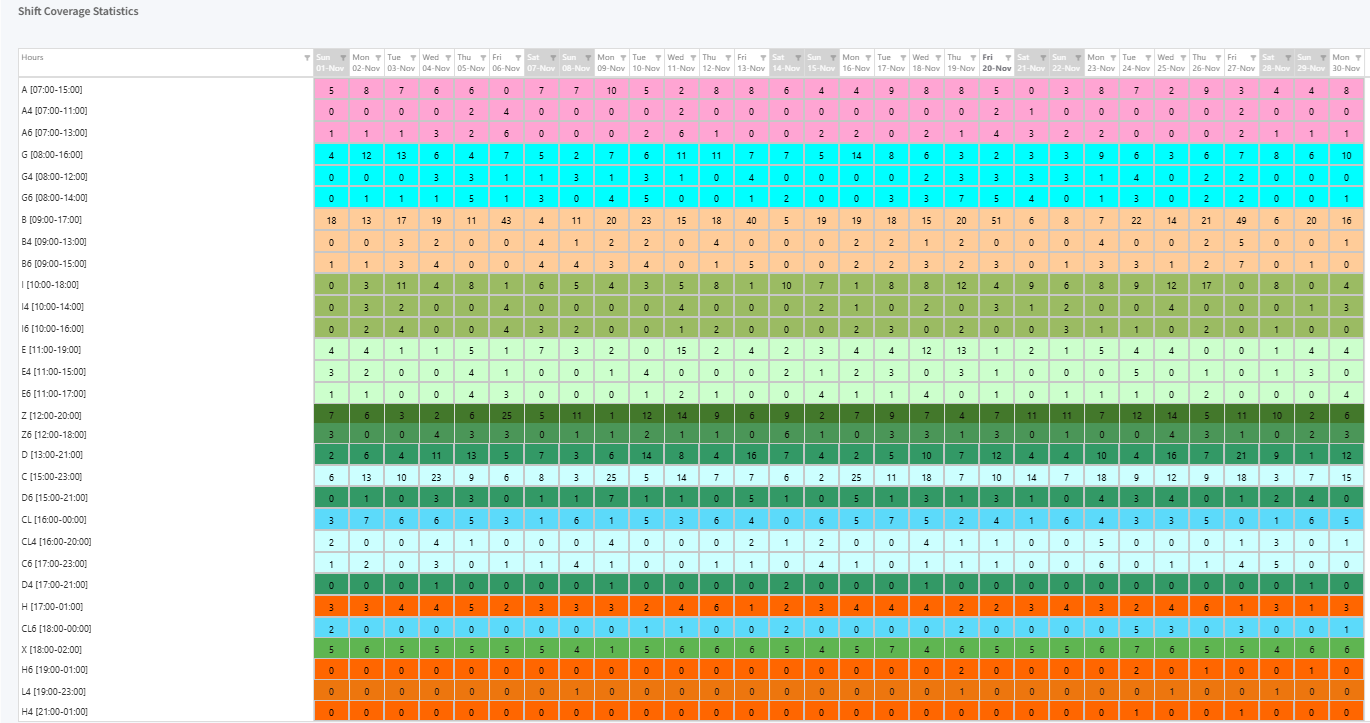
Demand heatmap
Set the service level target and average call volume, and TimePlanner calculates the agents needed in every 30-minute interval.
TimePlanner
Plan intelligently. Operate confidently.
Reach out to arrange a demo of TimePlanner.
Certified to ISO 9001, ISO/IEC 27001 and ISO 22301
 ISO 9001Quality Management
 ISO/IEC 27001Information Security
 ISO 22301Business Continuity